

Retailer impact
- Low awareness of relevant Metcash services
- Fragmented journeys between platforms
- Repeated onboarding and learning
- Higher chance of looking outside the ecosystem
Designing a clearer brand and service architecture so retailers can discover relevant services, understand how they connect and move across the Metcash ecosystem with less friction.
Role · UX Strategy, Brand Architecture, Ecosystem Mapping & Omnichannel Planning
Before proposing an experience model, we explored common ways organisations structure master brands, sub-brands, products and services.
One master brand leads everything.
A single parent brand is clearly visible across its products and services. Individual offerings may solve different needs, but customers can easily understand that they belong to the same organisation.
Organisations that want customers to quickly recognise that multiple products or services belong to one connected ecosystem.
 Google Maps
 Google Drive
 Google Meet
 Google Photos
Product icons from Google’s official product directory. View official source ↗
Each service has a different purpose, but the Google name makes the relationship between them immediately clear.
A retailer could join one Metcash platform and still have limited awareness of related services across the wider ecosystem. This created experience friction for retailers and repeated operational effort for the business.
Before taking the problem into stakeholder workshops and customer research, we first needed our own working view of the ecosystem. We mapped the brands, platforms and services already in place, then looked at them through different lenses to understand where relationships were clear, where they overlapped and where questions remained.
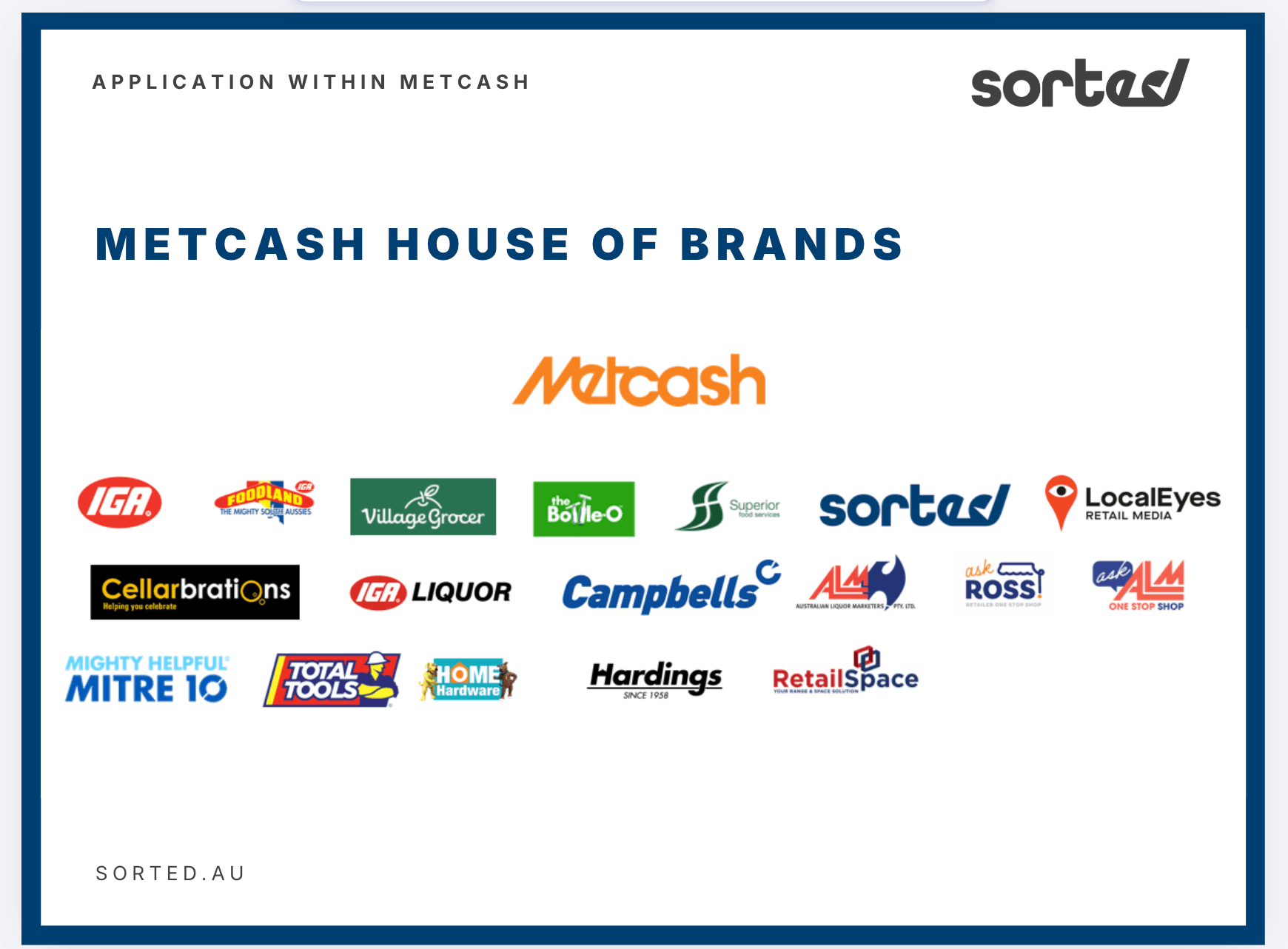
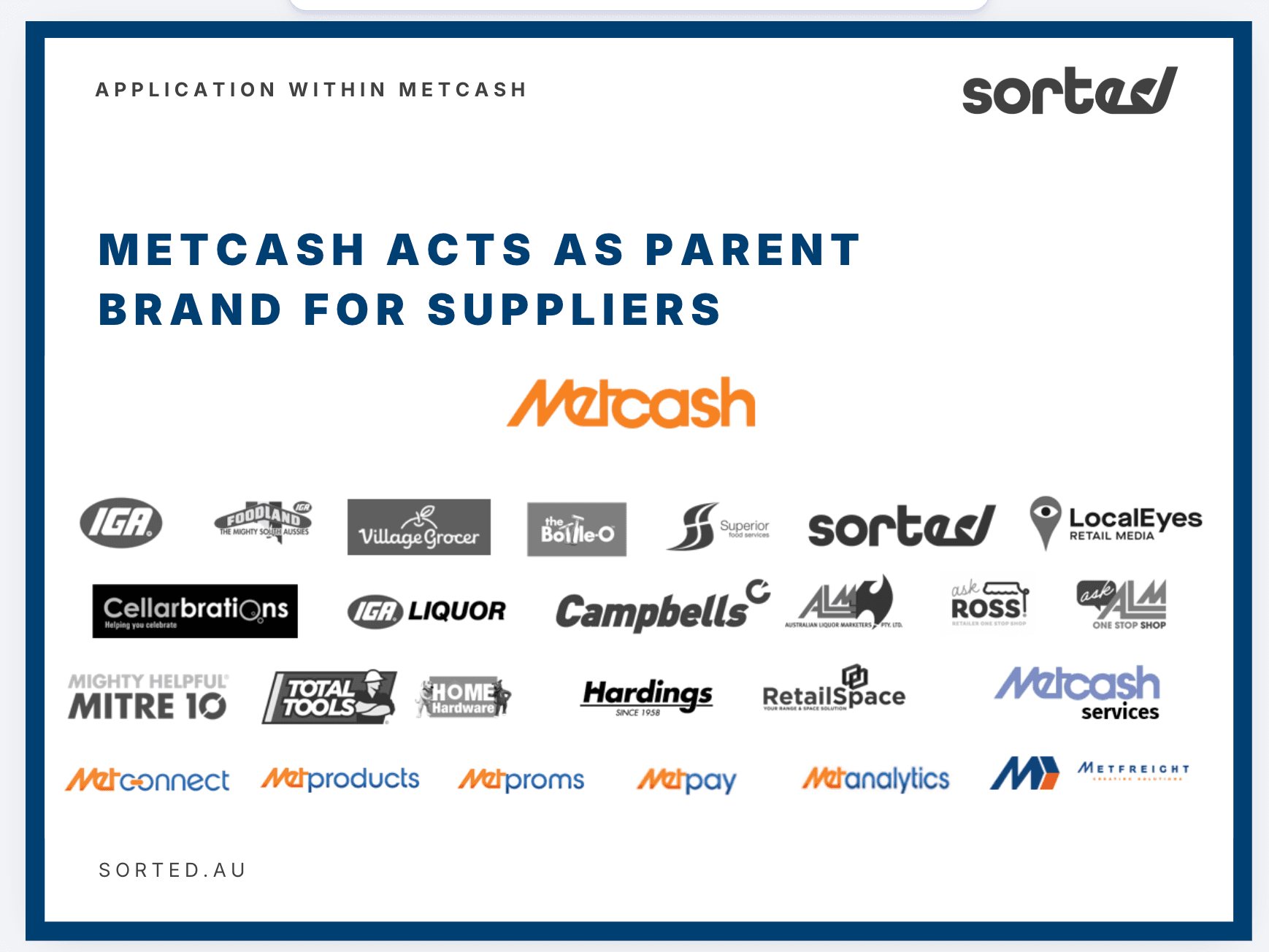
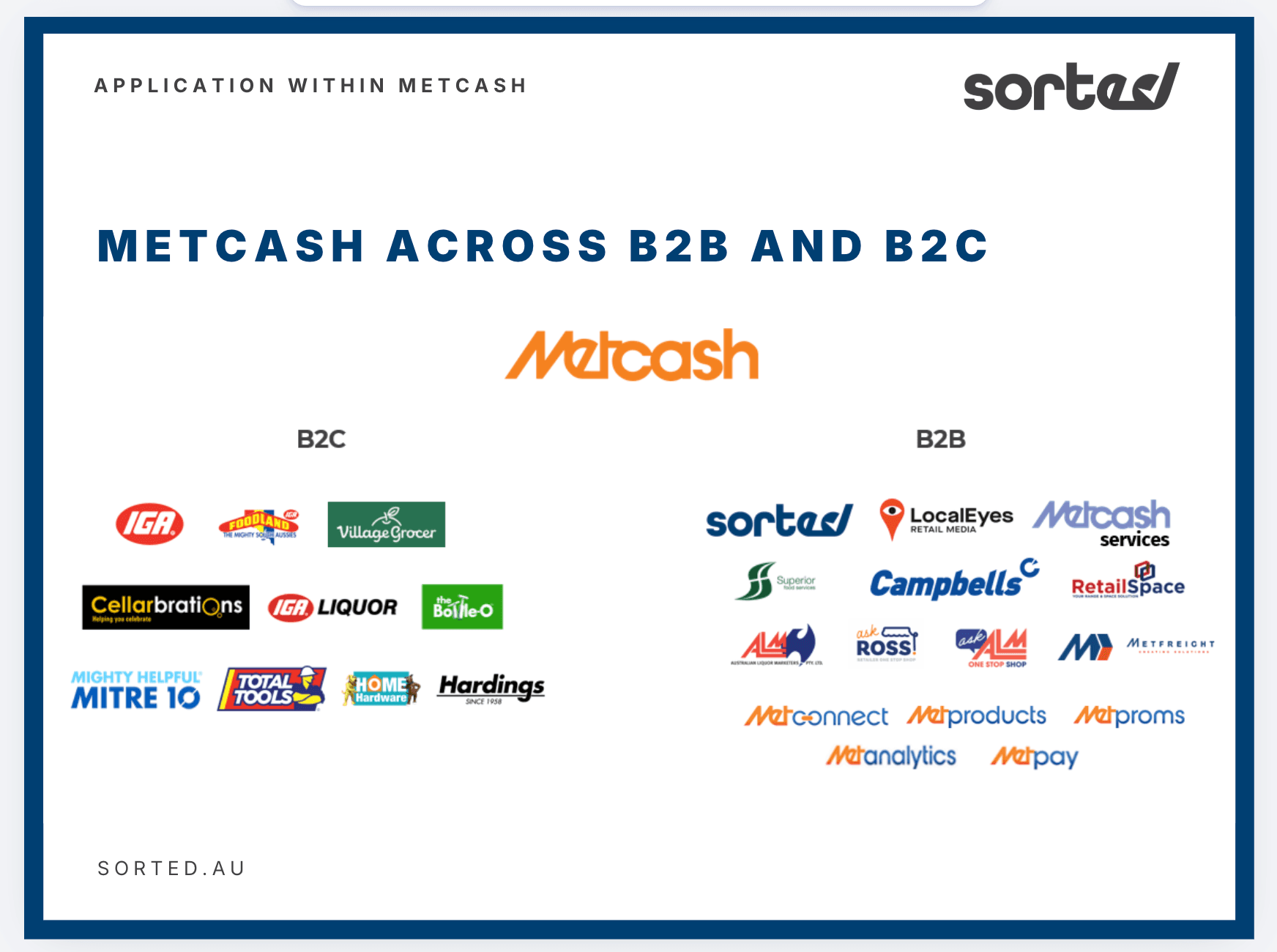
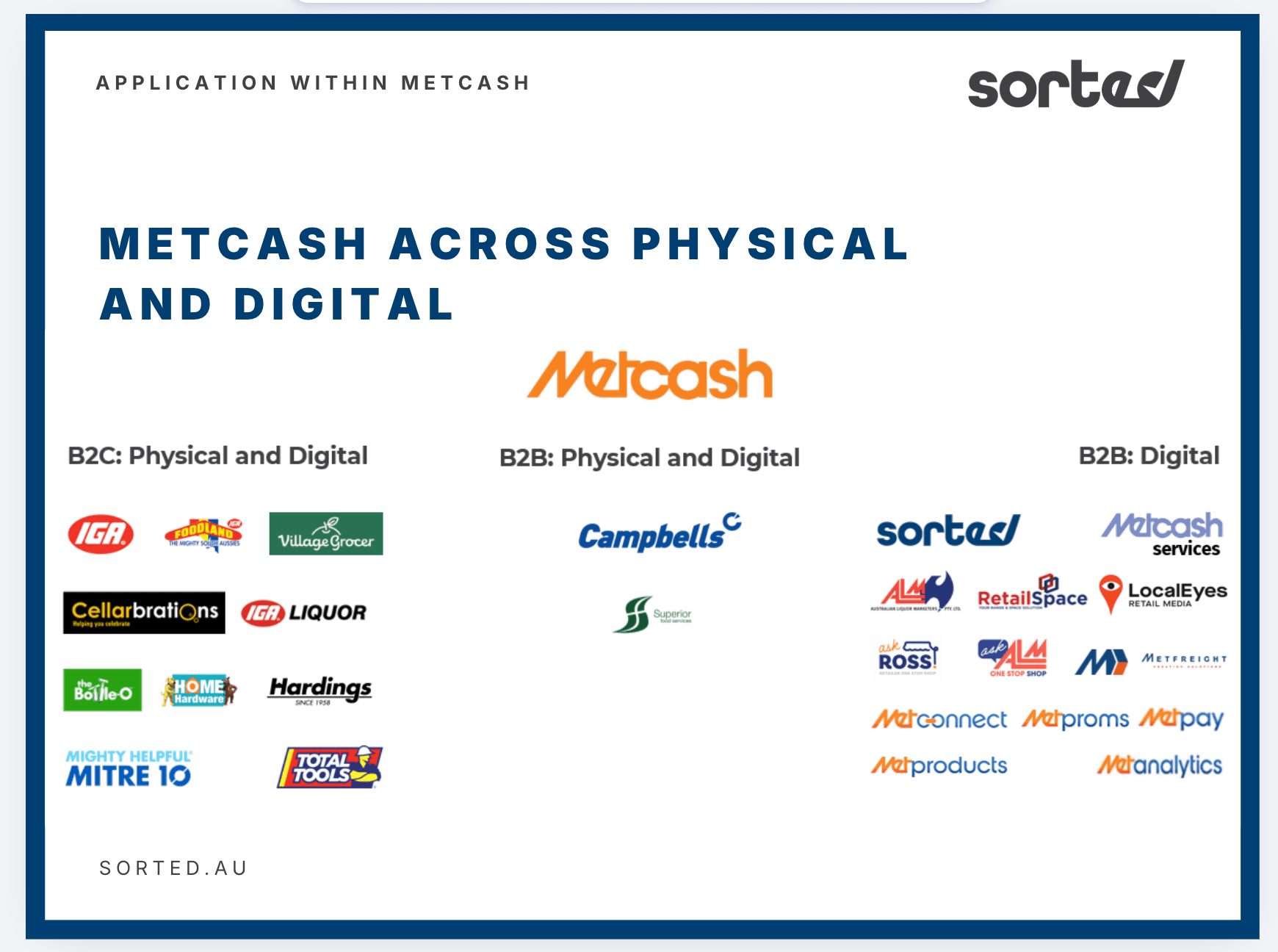
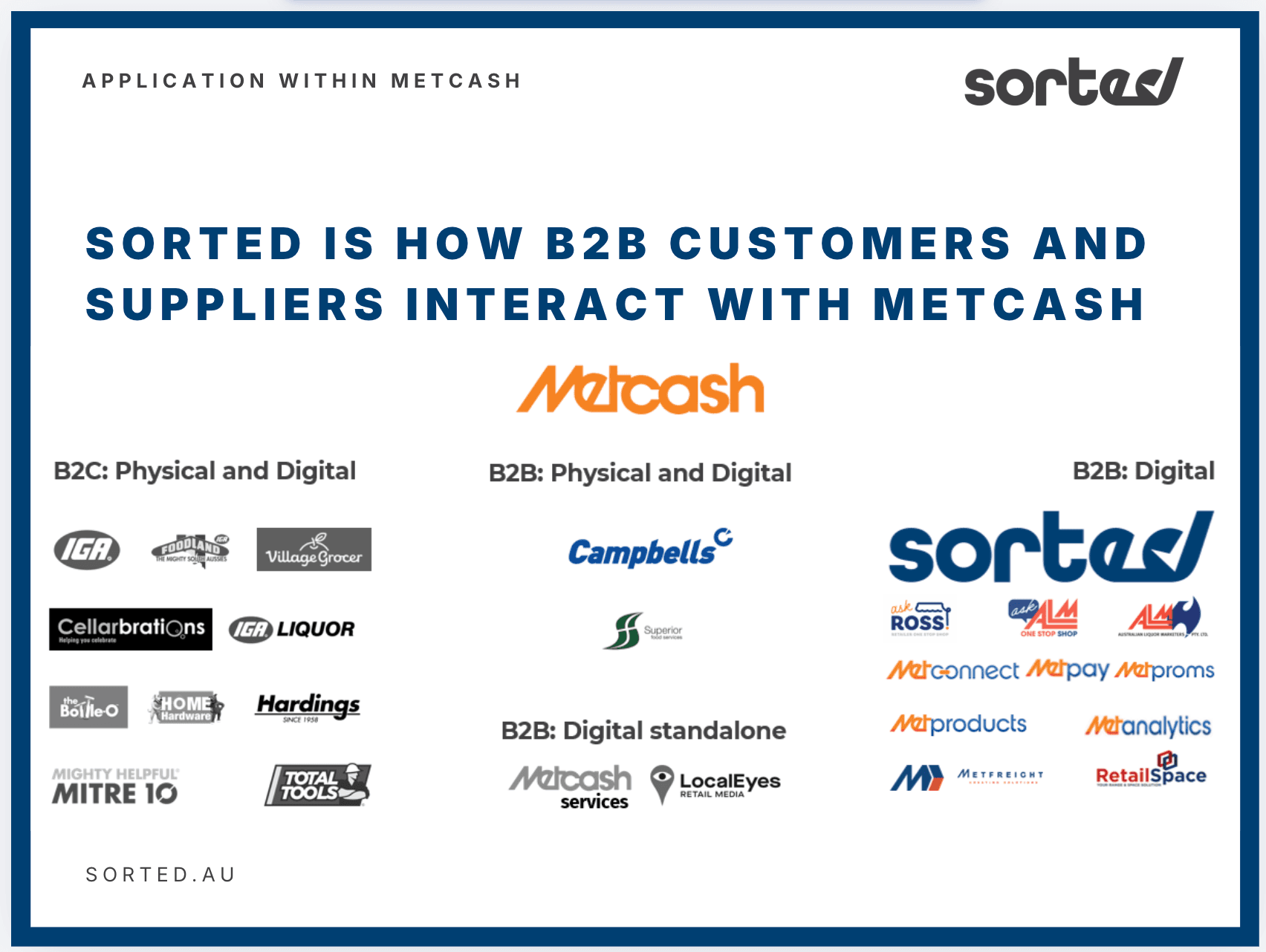
B2C vs B2B. Who is the experience serving, and how does that change the relationship?
Physical vs digital. Where does the interaction happen, and where must continuity be maintained?
Brand vs platform vs service. What does the retailer need to understand, and what can stay behind the scenes?
These were working lenses, not final classifications. Their purpose was to help us ask better questions in the next stage.
The ecosystem had evolved over time. Different businesses and platforms were created by different teams, at different points in time, while others became part of Metcash through business growth and acquisition. Each solved a valid business need, but together they created a fragmented experience for retailers.
Brands, platforms, services and ownership structures.
ExamplesFood · Liquor · Grocery
ExamplesCampbells · ALM · Sorted
ExamplesAskRoss · AskALM
ExamplesMetpay · Metproms · Metproducts · Metanalytics
Representative examples from the working ecosystem map.
Each part makes sense within its own business context.
The jobs they need to get done.
During early planning, the business suggested Sorted as a potential starting point for a more connected retailer experience. This direction was influenced by Project Olympus, where Sorted had already been used as the preferred reference for aligning the experience across Supermarket, Campbells and ALM.
Project Olympus had already established a precedent for using Sorted as a common experience reference across multiple retailer platforms. This gave the business a familiar foundation to build from.
Sorted already had a shared reference role across multiple retailer platforms.
Explore whether that familiarity could support a wider connected retailer experience.
Test Sorted as one possible entry point into the broader Metcash ecosystem.
These questions were intended to be validated through stakeholder workshops and customer research before confirming the final model.
Sorted was a working hypothesis, not a validated final solution.
We planned the work in two phases. Phase 1 focused on understanding and organising the existing ecosystem. Phase 2 focused on turning that foundation into a clearer brand, service and experience direction.
Understand the current ecosystem, validate relationships and define a clearer structure.
Translate the agreed architecture into propositions, experience concepts, brand guidance and implementation support.
Phase 1 was planned to validate the current ecosystem with stakeholders and customers, then establish a clearer brand architecture model before moving into experience development.
Build a shared understanding of the current ecosystem, business goals, audiences and pain points.
Use the findings from Stage 1 to define a clearer relationship between Metcash, business groups, brands, platforms and services.
Once the architecture was validated, Phase 2 was planned to translate that foundation into positioning, value propositions, experience concepts, brand guidance and implementation support.
Define what each parent brand or group stands for and how its services connect to the wider ecosystem.
Clarify what each service is, who it serves and why it matters to retailers.
Explore how the agreed strategy could translate into a clear visual and experience direction.
Stress-test the preferred direction through representative physical and digital applications.
Prepare reusable guidance and assets to help teams apply the agreed direction consistently.
Enable internal teams to understand and apply the strategy, guidelines and assets.
The next step was to validate the proposed architecture through stakeholder workshops and customer research. Insights from that work would then shape the experience concepts, cross-platform journeys and implementation direction.
Validate ownership, relationships and business priorities
Understand retailer needs, expectations and mental models
Refine the ecosystem structure based on evidence
Translate the agreed structure into brand and experience development
View the detailed strategy deck to see the complete Phase 1 and Phase 2 roadmap, planned activities, deliverables and handover approach.
Opens in a new tab. Access follows the Figma file’s sharing settings.